
Small monkey breeds are tiny monkeys that stay small even when they grow up. Breed means a specific type or group of an animals in universe. Little monkey breed are formed to be small so they could walk on thin branches, hide from predators, eat tiny insects and survive on less food.
List of small monkey breeds:
Below is the types of small monkeys in the world:
- Emperor Tamarin
- Capuchin Monkey
- Pygmy Marmoset
- Squirrel Monkey
- Talapoin Monkey
- Graells’s Tamarin
- Golden Lion Tamarin
- Night Monkey
- Cotton‑Top Tamarin
- Silvery Marmoset
- Red-handed Tamarin
- Dusky Titi
Emperor Tamarin
Emperor Tamarin is a small, tree-dwelling monkey native to the rainforests of South America. They are famous for their long white mustache that hangs down past their chin. They are extremely small size of a squirrel, weighing only around 400 to 500 grams. They are omnivores.
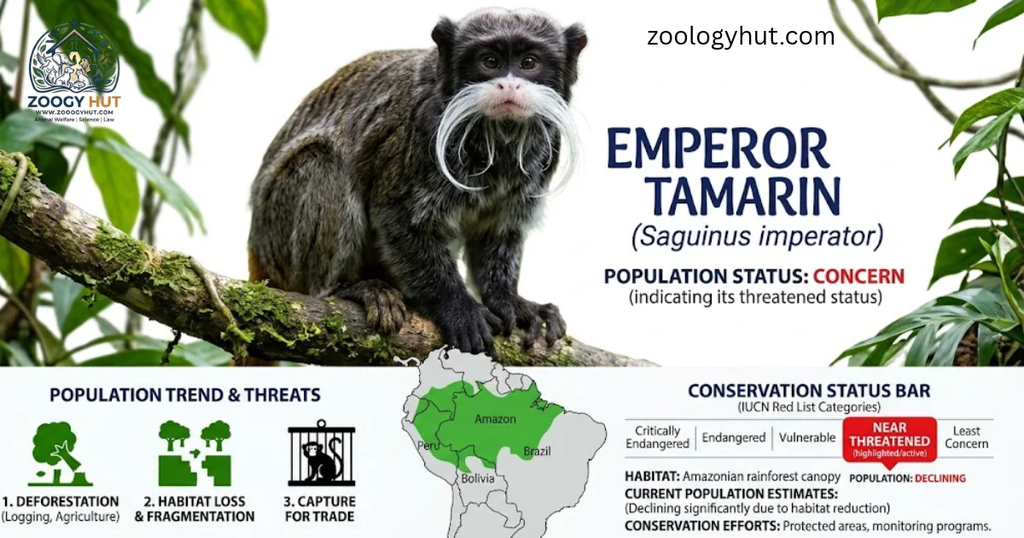
In the wild, they live for about 10 to 12 years, but in a zoo with proper care, they can live up to 15 to 20 years. Keeping them as pets is illegal without special permits because they require high maintenance and specialized care. They are not safe for children and may bite or scratch if handled roughly.
Emperor Tamarins need a warm, humid environment to live. Touching or handling an Emperor Tamarin can transmit harmful bacteria, viruses, and parasites to humans through bites, scratches, or direct contact. They are used in medical research to test vaccines and drugs.
Capuchin Monkey
Little monkey name Capuchin is a intelligent, tree-dwelling monkey native to the tropical forests of Central and South America. They are famous for their black or dark brown fur with light cream or white patches around their face, throat, and shoulders. They weigh around 1.5 to 4 kg.
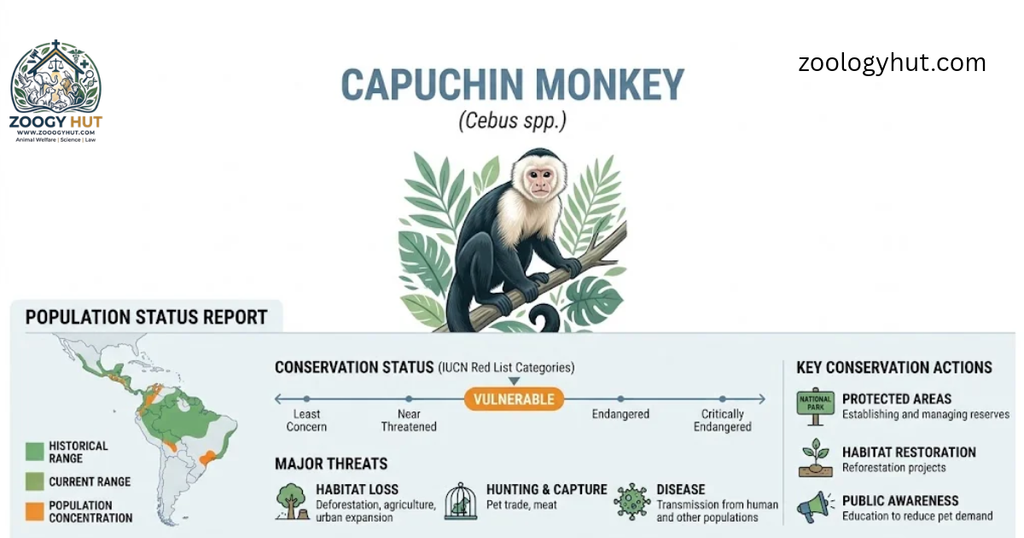
They are omnivores. In the wild, they live for about 15 to 25 years, but in a zoo with proper care, they can live up to 35 to 45 years. Keeping them as pets is illegal without special permits in many regions because they require high maintenance, specialized care, and large enclosures.
They are not safe for children. Even though they are smart, that can quickly become aggressive. Capuchin Monkeys need a warm, humid environment with large space to jump, climb, and forage, along with constant mental stimulation.
Touching them can transmit harmful bacteria, viruses, and parasites to humans through bites, & direct contact. They are studied in medical and behavioral research to test vaccines, drugs, and human brain functions due to their advanced intelligence.
Pygmy Marmoset
Pygmy Marmoset is the smallest true monkey, native to the Amazon rainforests of South America. They have brownish-gold fur, long tails, and facial hair. They are weighing only about 100 to 140 grams (less than a cup of tea).
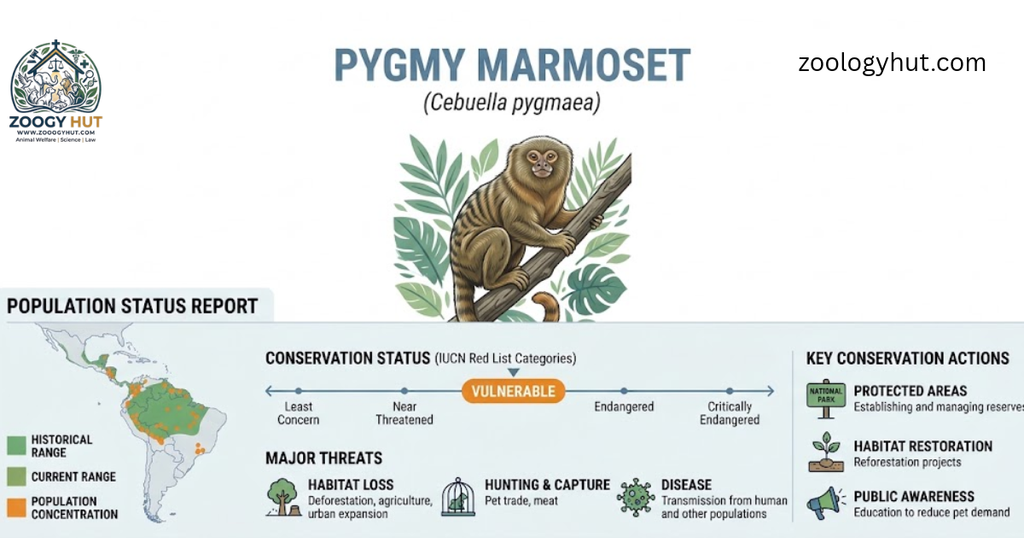
They are omnivores. Their main food is tree sap and gum, which they get by chewing holes in tree bark, along with insects, fruits, and nectar. In the wild, they live for about 10 to 12 years, but in a zoo with proper care, they can live up to 15 to 20 years.
They are consider as pet monkey breeds but illegal without special permits. They are not safe for children because they are tiny &, stress can easily scare them, leading to quick bites or scratches. Pygmy Marmosets need a warm environment and living in small family groups.
Touching them can transmit harmful bacteria, viruses to humans through bites or direct contact. They are studied in medical to test vaccines, learn about human aging, and understand genetic diseases because they are biologically very similar to humans.
Squirrel Monkey
The Squirrel Monkey is a small energetic, tree-dwelling monkey native to the tropical rainforests of Central and South America. They are known for their short, olive-green fur, white faces with black masks around their mouths and long, non-prehensile tails. They weigh only about 750 to 1,100 grams.
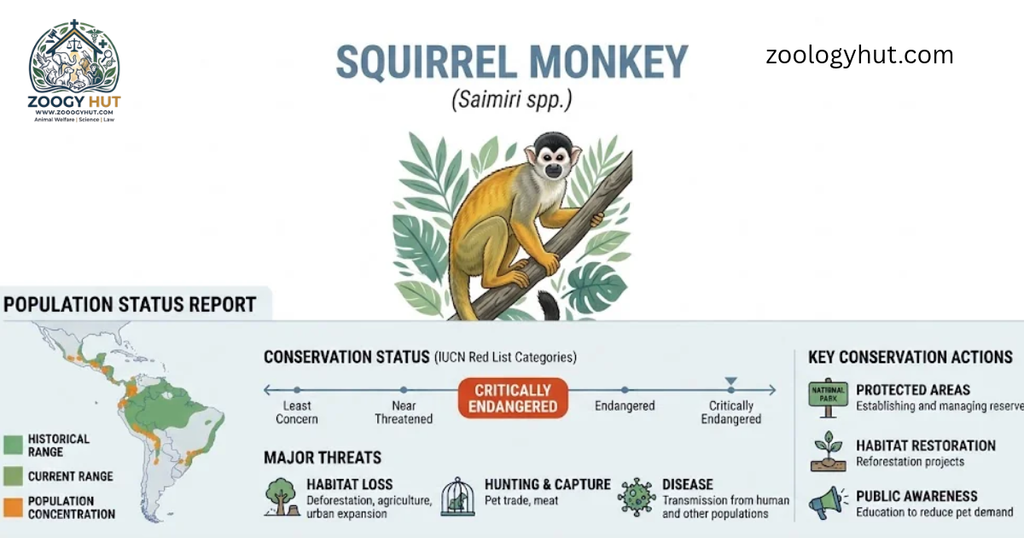
They are omnivores. Their main diet consists of fruits, insects, leaves, seeds, nuts, spiders, and small vertebrates like tree frogs. In the wild, they live for about 15 years, but in a zoo with proper care, they can live up to 20 to 25 years.
Taking them as pets is illegal without special permits because they require high maintenance, specialized care, and complex social groups. They are not safe for children. They are fast, unpredictable wild animals that can bite or scratch when stressed.
Touching or handling a Squirrel Monkey can transmit harmful bacteria and parasites to humans. Scientists study them in medical research to test vaccines, understand vision, and study infectious diseases because they are biologically very similar to humans.
Talapoin Monkey
Talapoin Monkey is the smallest monkey species in Africa, native to the swampy forests and rain forests of Central Africa. They have greenish-yellow fur on their back. They are tiny, weighing only about 0.8 to 1.3 kilograms. They are omnivores.
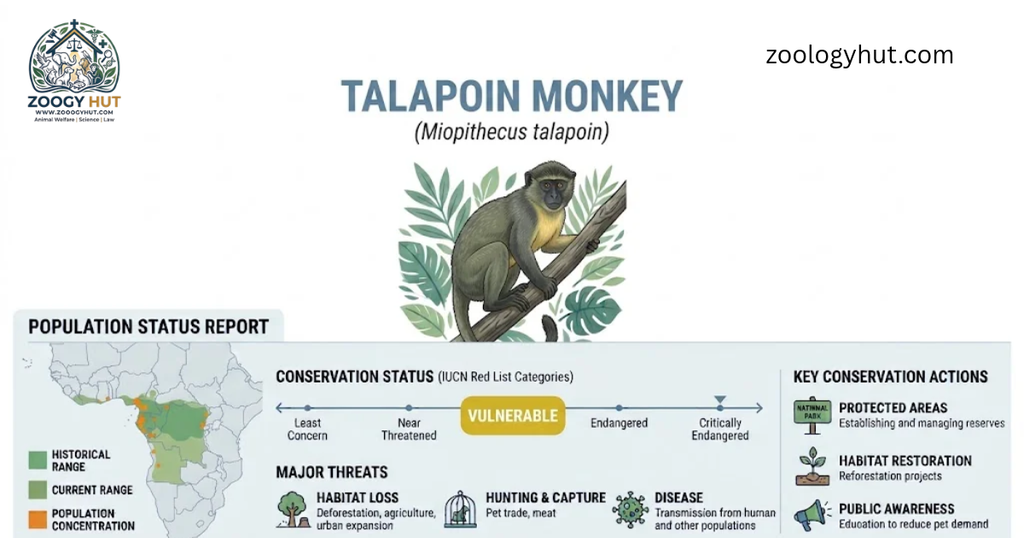
In the wild, they live for about 12 to 15 years, but in a zoo, they can live up to 20 to 28 years. In the wild, their main causes of death are predators (like eagles, snakes, and leopards), habitat loss, and illegal hunting for bushmeat. Keeping them as pets is illegal without special permits.
They are not safe for children. As wild animals, they can become nervous or aggressive. They need a warm, humid environment with access to water for swimming, plenty of climbing structures, and living in large social groups.
Scientists study them in medical research to test vaccines, study viral infections, and explore human reproductive health because of their close biological similarity to humans.
Graells’s Tamarin
Graells’s Tamarin is a tiny, tree-living primate native to the Amazonian rainforests of Ecuador, Peru, and Colombia. They are known by their dark brown fur and a long tail. They weigh roughly 400 to 500 grams, making them about the size of a squirrel.
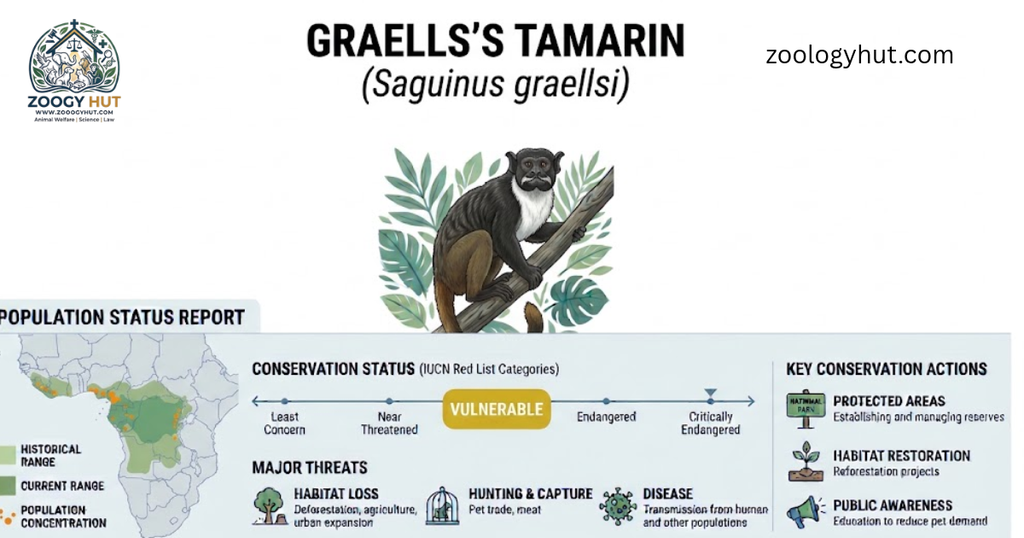
They are omnivores. In their natural habitat, they usually survive for 10 to 12 years, but under professional zoo care, they can reach 15 to 20 years. Their primary causes of death include natural predators (such as birds of prey and snakes), habitat destruction from deforestation, and severe climate shifts.
Keeping them in a home setting is illegal without special permits, as they need expert care, strict diets, and regulatory protection. They are unsuitable for children. Direct contact or handling can pass dangerous bacteria, viral pathogens, and parasites to humans through scratches, bites, or physical contact.
Golden Lion Tamarin
Golden Lion Tamarin is a small, vibrant primate native to the coastal Atlantic rainforests of Brazil. They are famous for their bright reddish fur and a thick mane around their face, giving them the appearance of a mini lion. They weigh only about 500 to 700 grams.
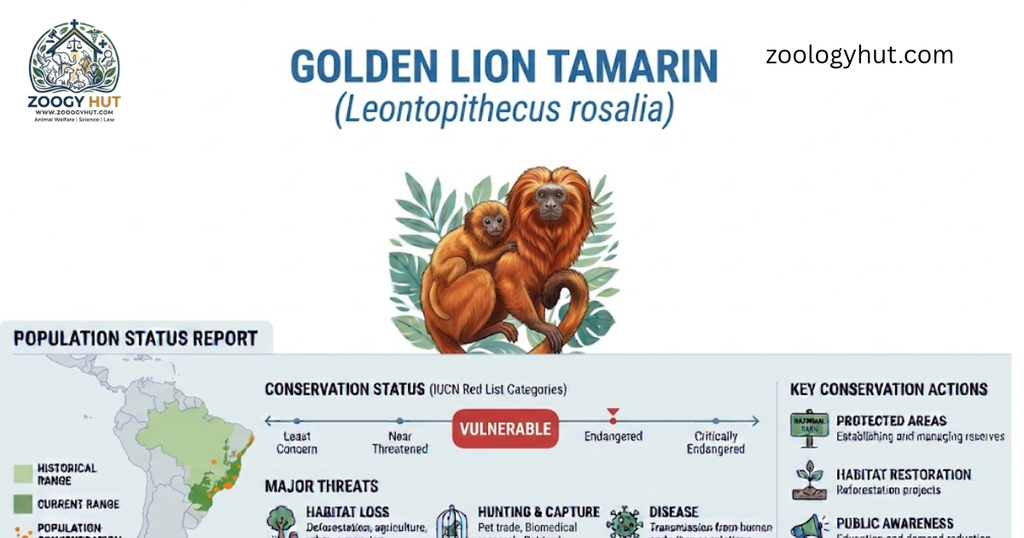
They are omnivores. In the wild, they typically live for 10 to 15 years, but in zoos with dedicated care, they can live up to 20 years. Taking them as pets is strictly illegal without high-level government permits, as they are a protected, highly endangered species.
They are completely unsafe for children. They are wild animals that will bite or scratch sharply if scared or touched roughly. Scientists study them in biological research to analyze genetic conservation, reproductive health, and vaccine responses due to their close biological link to humans.
Night Monkey
Night Monkey (also known as the Owl Monkey) is a small primate native to the tropical forests of Central and South America. They are famous for being the only true nocturnal (night-active) monkeys in the world. They weigh around 800 to 1,200 grams.
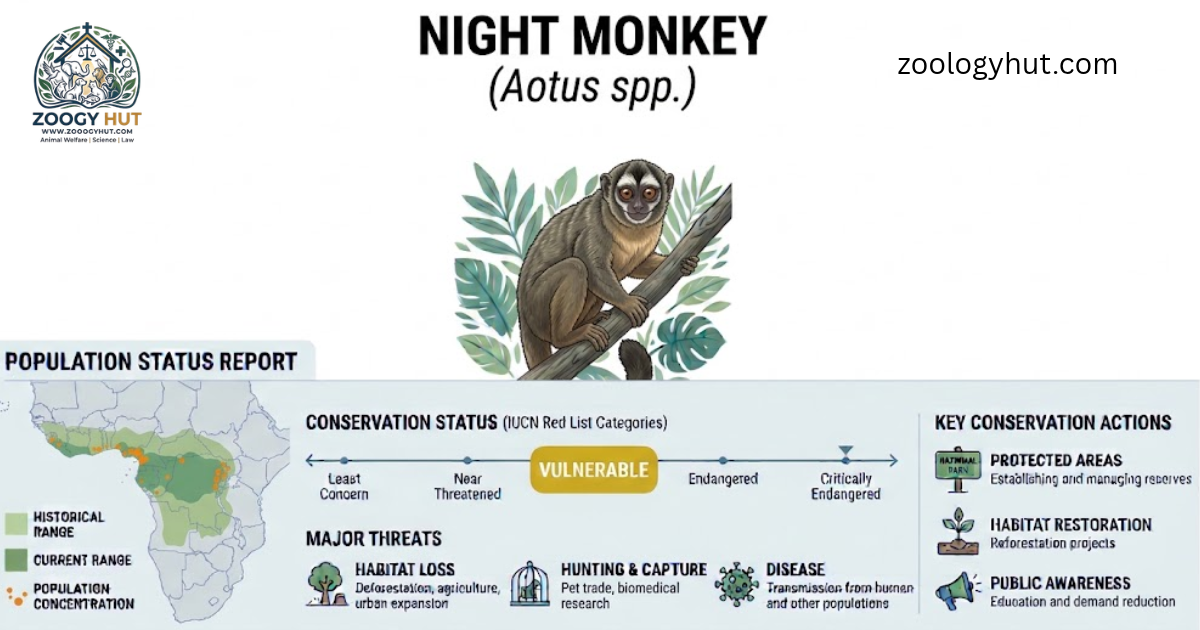
They communicate with each other using a unique range of vocal sounds, including owl-like hoots and warning grunts. They also leave scent marks on tree branches using urine and special body glands to send messages to their group.
They are omnivores. In the wild, they usually live for 11 to 13 years, but under professional zoo care, they can live up to 20 years. In the wild, their main causes of death include nocturnal predators (like owls, snakes, and ocelots), severe habitat loss, and illegal capture for scientific research.
They are unsafe as pet. Disturbing them during the day makes them stressed and aggressive. Scientists study them in biomedical research specifically for malaria vaccines and eye research, as their immune systems and vision organs are biologically very similar to humans.
Cotton-Top Tamarin
Cotton-Top Tamarin is a tiny, highly endangered primate native to the tropical forests of northwestern Colombia. They are recognizable by the long, flowing white crest of hair on top of their head. They weigh only about 300 to 450 grams, roughly the size of a squirrel.
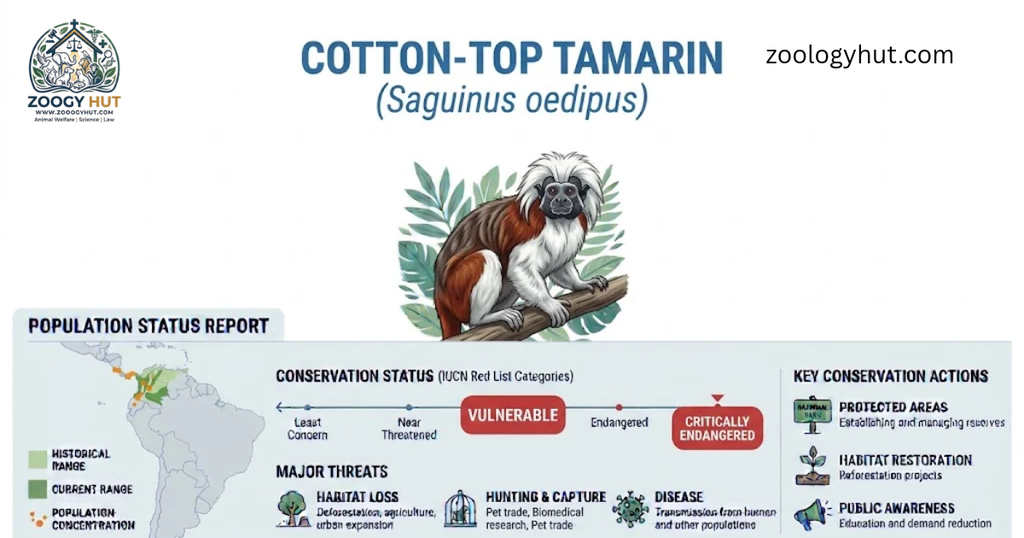
They communicate using a complex language of over 38 distinct vocal sounds, including whistle-like calls, chirps, and soft trills. They also use scent marking with special body glands to declare territory and share social information. They are omnivores.
In the wild, they usually live for 10 to 13 years, but in zoos with expert care, they can live up to 24 years. Taking them as pets is strictly illegal without high-level permits, as they are critically endangered and protected under international wildlife laws.
Scientists study them in medical research to understand colon cancer and immune system diseases, as they naturally develop similar intestinal conditions as humans.
Silvery Marmoset
Silvery Marmoset is a small, tree-dwelling monkey native to the eastern Amazon rainforests of Brazil. They are known for their striking silvery-white or pale grey fur, and hairless pink ears. They weigh only about 300 to 400 grams.
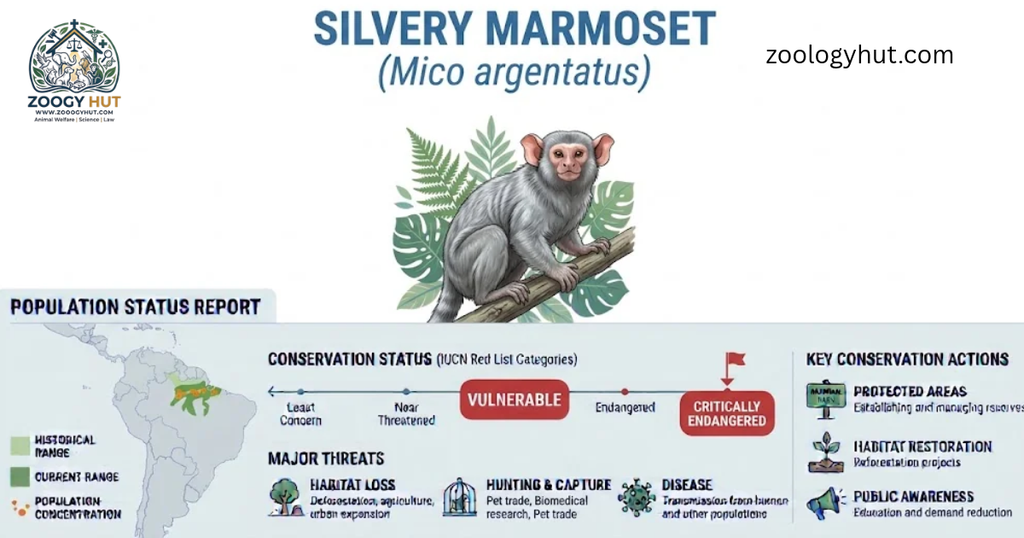
They communicate through high-pitched chirps, whistles, and alarm squeaks. They also use scent markings from specialized glands on tree trunks to define their territory. They are omnivores. In the wild, they typically live for 10 to 12 years, but under professional zoo care, they can live up to 16 to 20 years.
They are unsafe for children. Direct contact or handling can transmit harmful bacteria, viruses to humans. Scientists study them in biological and medical research to test vaccines, study infectious diseases, and explore metabolic functions due to their close biological similarity to humans.
Red-handed Tamarin
Red-handed Tamarin (also known as the Midas Tamarin) is a small primate native to the tropical rainforests of the northeastern Amazon. They weigh roughly 400 to 550 grams. In zoology, they are famous for their leaping ability, able to jump distances of up to 60 feet (18 meters) between trees without injury.
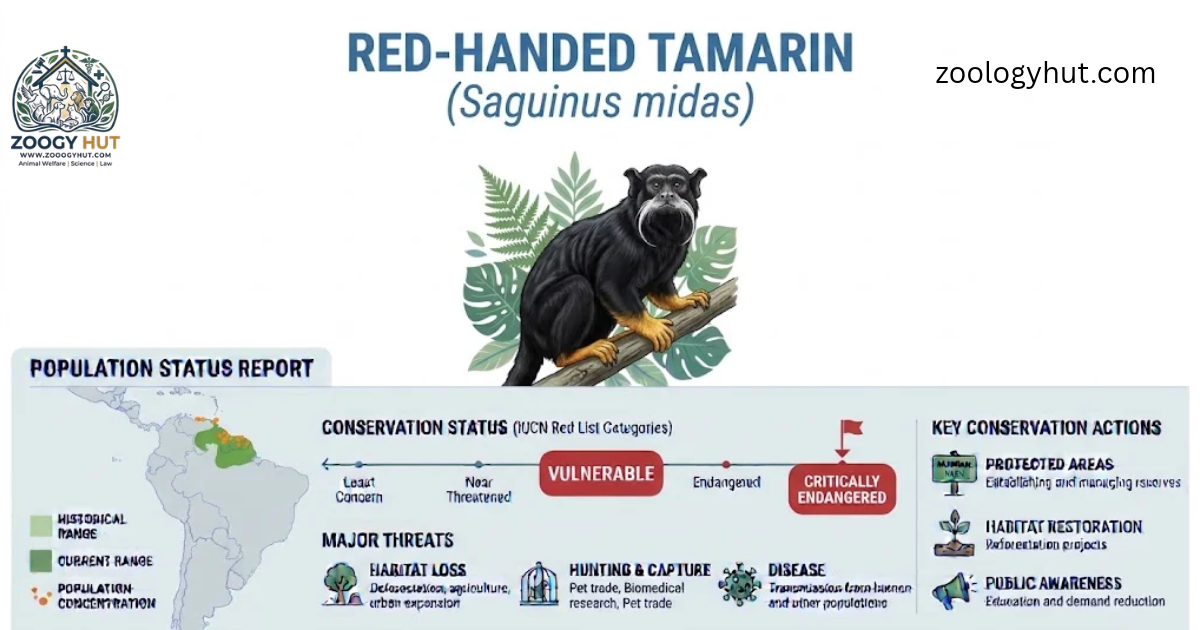
Zoologists also study their rare “cooperative breeding” system, where usually only one dominant female reproduces while the whole family group helps carry and care for the offspring. They are omnivores. In the wild, they usually live for 10 to 15 years, but under professional zoo care, they can live up to 20 to 22 years.
Direct contact or handling can transmit dangerous bacteria, viruses, and parasites to humans through bites. Scientists study them in biomedical research to test vaccines, analyze infectious viral diseases, and study social genetics due to their biological similarities to humans.
Dusky Titi
Dusky Titi (also known as the Dusky Titi Monkey) is a small, tree-dwelling primate native to the rainforests of the Amazon Basin. They weigh around 800 to 1,200 grams. Zoologists study Dusky Titis because they stay with one partner for life. Male and female pairs sleep together and wrap their tails around each other.
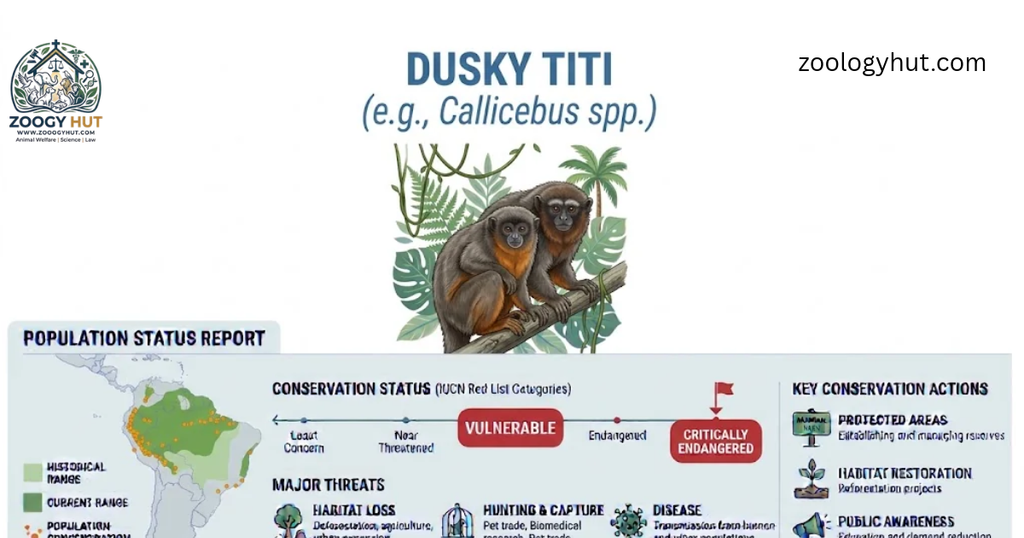
The father provides primary infant care, carrying the baby at almost all times except during nursing. They are frugivorous omnivores. In the wild, they live for 12 to 15 years, but under professional zoo care with proper nutrition, they can live up to 20 to 25 years.
Scientists study them in behavioral and biological research to understand social bonding, pair-bonding neurobiology, and parenting roles due to their close biological and psychological similarities to human family structures.
Other Monkey Breeds Name That Aren’t Small
- Mandrill
- Japanese Macaque
- Probocis Monkey
Mandrill
The Mandrill is famous for being the world’s largest and most colorful monkey, featuring vibrant blue and red facial markings. Native to tropical rainforests in Equatorial Africa.
Japanese Macaque (Snow Monkey)
They are popularly known as the “Snow Monkey”. They are native to Japan. The Japanese Macaque is famous for bathing in natural hot springs to stay warm during cold winters.
Proboscis Monkey
They are famous for its unusually large, floppy nose and pot belly. They are native to the island of Borneo. They are unique skilled swimmer with webbed feet and lives primarily in mangrove forests.
Conclusion
Small Monkey Breeds are tiny monkeys that stay small forever. They have light bodies and sharp claws to jump high, catch small bugs, and live together in deep rainforests. These little monkey breeds need special forest food and can bite, so they belong to wild instead of inside houses as pet monkey.
FAQs
What are the best small pet monkey breeds?
There are no pet monkey breeds because all monkeys are wild animals. The smallest species people often search for are Pygmy Marmosets, Finger Monkeys, Cotton-Top Tamarins, and Squirrel Monkeys. Because they bite, spread diseases, and need wild environments, none of them are suitable as household pets.
What are those small monkeys called?
Small monkeys that people often search for are called marmosets, tamarins, or finger monkeys (which are actually baby Pygmy Marmosets). While their tiny size makes them popular.